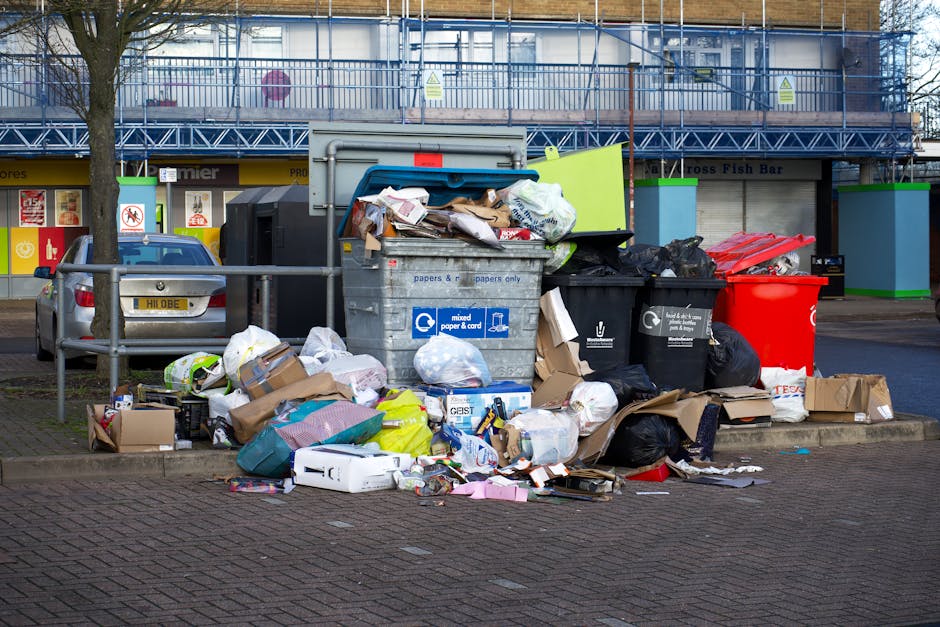
Best rubbish clearance for flats near Plaistow tube station
If you live in a flat near Plaistow tube station, rubbish clearance can be more awkward than it first sounds. Stairwells are tight, communal entrances get busy, parking can be tricky, and one bulky item can turn into a half-day shuffle. The best rubbish clearance for flats near Plaistow tube station is the service that removes the stress as well as the waste: fast arrival, careful handling, clear pricing, and proper disposal. In this guide, we'll walk through how it works, what to look for, where people go wrong, and how to choose a service that genuinely fits flat living in this part of East London.
Whether you're clearing out a one-bedroom rental, a family flat, or a shared property between tenancies, the right approach saves time, avoids mess, and keeps neighbours happy. Simple enough in theory. In practice, there are a few details worth getting right.
Why rubbish clearance matters in flat blocks near Plaistow tube station
Flat clearances are different from house clearances. There's less space to sort things out, less room to stage bulky waste, and more risk of causing disruption if the job is rushed. Near Plaistow tube station, that often means shared hallways, limited on-street waiting space, and neighbours who notice every trip up and down the stairs. You feel it immediately when a clearance is done badly: bags left in the wrong place, a lift blocked at the wrong moment, or items dragged across flooring and chipped on the way out.
That's why people look for a service that understands flat living rather than just general rubbish removal. The best rubbish clearance for flats near Plaistow tube station should be planned around access, timing, building rules, and the type of waste being removed. It should also feel calm. No shouting, no fuss, no "we'll see what happens when we get there" attitude. To be fair, that alone rules out a lot of poor experiences.
There's also a practical angle. In flats, waste builds up quickly because storage space is limited. One broken wardrobe, a couple of old mattresses, some kitchen waste from a move-out, and suddenly the place feels cramped and stressful. Get the clearance done properly, and the whole flat resets. You notice the difference straight away.
How rubbish clearance for flats works
Most flat clearances follow a straightforward process, but the quality of the service depends on how carefully each stage is handled. A good provider will usually begin with a description of what needs removing. That might be a few black bags, old furniture, a fridge, broken shelving, or a full end-of-tenancy clear-out.
Next comes access. For flats, this is the bit that matters more than people expect. Is there a lift? Is there a narrow staircase? Can a van stop close enough to load quickly? Are there any time restrictions from the building or the estate? These details change the job enormously. A service that asks the right questions before arriving is usually a much safer bet.
Once on site, the team should remove items carefully, separate reusable or recyclable materials where possible, and avoid leaving the property untidy. If the clearance includes bulky furniture or specialist items, it helps to use dedicated services such as furniture clearance or mattress and sofa disposal. If the waste is general mixed rubbish, a broader waste removal service may be the better fit.
For more involved jobs, like a flat with years of stored items, it can make sense to combine services. A cluttered loft, a packed storage cupboard, and an old sofa in the lounge may need a mix of loft clearance and flat clearance support. The trick is matching the method to the mess, not forcing the mess into one neat category. Life rarely cooperates that much.
Key benefits and practical advantages
The obvious benefit is convenience, but there's more to it than that. A well-run flat clearance service can reduce the physical strain of moving heavy items downstairs, minimise disruption to neighbours, and lower the risk of damage to walls, bannisters, and door frames. In tight London properties, that's no small thing.
Another major benefit is speed. If you're between tenancies, preparing a sale, or trying to reclaim a room that has turned into a storage cave, a fast turnaround is often worth more than shaving a few pounds off the price. Time has a habit of becoming expensive when a flat stays half-cleared for too long.
There's also the peace-of-mind factor. Reputable clearance services should understand what can be reused, recycled, or disposed of responsibly. That matters if you're looking for a cleaner, more thoughtful outcome rather than simply "getting rid of stuff". If sustainability matters to you, it's worth checking a provider's approach to recycling and sustainability before you book.
And here's a small but important one: a proper service can help reduce friction with neighbours and building managers. Quiet, tidy removal. No drama. That, frankly, is worth a lot.
Who this is for and when it makes sense
This kind of service is ideal for tenants, landlords, homeowners, letting agents, and property managers. It is especially useful when the flat is on an upper floor, the building has limited access, or the waste includes bulky items that are difficult to carry safely without help.
Tenants often need it at the end of a tenancy, especially when there's leftover furniture, broken household items, or a final sweep of mixed rubbish. Landlords may need a quick reset between occupants, which can include anything from general waste to damaged appliances. If you're dealing with a fuller property refresh, a broader home clearance or house clearance may be more appropriate, depending on what's being removed.
Businesses using flats as live-work spaces, storage areas, or temporary accommodation also benefit from reliable clearance. In those cases, business waste removal can be useful if the waste is commercial in nature. And if you're clearing an office-style room or a small workspace in a converted flat, office clearance may fit better than a generic service.
Truth be told, if you're staring at a pile of rubbish and thinking, "I could do this myself if I had a van, two friends, and a weekend", then you probably already know the job is bigger than it looks.
Step-by-step guidance
Here's a practical way to approach flat rubbish clearance near Plaistow tube station without making the process harder than it needs to be.
- Identify what needs to go. Separate furniture, general waste, appliances, and anything potentially hazardous. A rough list is enough to start with.
- Check access. Note whether the flat has stairs, a lift, narrow corridors, or parking restrictions. Small details matter a lot here.
- Sort the items by type. Keep reusable furniture apart from normal rubbish if you can. It helps with recycling and cost control.
- Ask about special items. Fridges, freezers, paint, chemicals, and certain electricals should be handled properly. If needed, use services such as fridge and appliance removal or hazardous waste disposal.
- Request a clear price explanation. Good providers should explain how they quote and what affects the final cost. Their pricing and quotes information should make sense without a detective novel's worth of guesswork.
- Book a suitable time. Early slots can help avoid shared hallway traffic. Mid-morning often works well, but it depends on the building.
- Prepare the space. Move smaller items into one area if possible, keep paths clear, and protect any surfaces you're worried about.
- Confirm payment and service details. It's sensible to review payment and security information before the job starts.
A small bit of prep usually pays off. Even ten minutes spent clearing a route can make the whole visit smoother. The team gets in and out faster, and you don't end up watching a sofa wobble sideways through a doorway for longer than necessary. Nobody enjoys that scene.
Expert tips for better results
If you want the best rubbish clearance experience, start with clarity. The more precisely you describe the waste, the more accurate the service can be. "A bit of rubbish" and "two broken wardrobes, one mattress, six bags, and an old microwave" are not the same thing. Not even close.
Keep bulky items separate if you can. A sofa, a wardrobe, and mixed black bags all require different handling, and pricing can change depending on volume and weight. If the flat contains damaged seating or sleeping furniture, the specific mattress and sofa disposal page may also be relevant to your needs.
Another useful tip: ask how the service handles access in communal buildings. Experienced teams know how to protect corners, avoid blocking hallways, and work without creating a row in the stairwell. It sounds simple, but it's often the difference between a smooth job and a slightly embarrassing one.
If your clearance involves items from different rooms, think in zones. Kitchen waste, bedroom furniture, storage items, and paperwork each raise different issues. For paperwork, you may want confidential shredding rather than just general disposal. That little extra bit of thought can save headaches later.
Expert summary: the best clearance jobs are rarely the fastest to quote and forget. They're the ones where someone asks the awkward questions early, then turns up prepared and quietly gets on with it.
Common mistakes to avoid
One of the biggest mistakes is underestimating how much rubbish a flat can actually hold once you start pulling things out. A couple of cupboards and a storage bed can suddenly become a van-load. People often think they have "just a few bits", then discover three broken chairs, an old toaster, and more loose clutter than they realised. Happens all the time.
Another mistake is ignoring access problems. If the building has no lift and the item is heavy, the job becomes slower, riskier, and more expensive than expected. A good provider will ask about access up front; if they don't, that's a bit of a warning sign.
People also forget that not everything should go into a general rubbish load. Appliances, some electrical items, and potentially hazardous materials need proper handling. If you're unsure, it's better to ask than assume. Same goes for bulky building debris from a renovation or repair job. In that case, builders waste clearance is often the safer route.
Finally, don't choose purely on the cheapest number. Low quotes can hide extra charges for stairs, loading time, or item type. Sometimes they're fine. Sometimes they're not. A quote that is clear and consistent is usually the better bet.
Tools, resources and useful service pages
You don't need fancy equipment to get organised, but a few simple things help. Strong bin bags, gloves, a marker pen for labelling, and a spare box for small loose items can make the pre-clearance stage much easier. If you're sorting through mixed clutter, a couple of boxes labelled "keep", "donate", and "clear" can prevent a lot of second-guessing.
For flats with outbuildings, lock-ups, or shared storage areas, it may help to look at related services too. A cluttered storage room might need garage clearance support, while an overfilled roof space could point toward loft clearance. If you've got bulky household goods, furniture disposal can be a neat complement to a flat clearance job.
For people comparing service levels, it also helps to read the company information pages so you know how the business works. The about us page gives a sense of the team, while insurance and safety explains how risk is managed. Those details are boring until they matter. Then they matter quite a lot.
If you want to book quickly, the book online route can be a practical next step, especially when you already know roughly what needs removing.
Law, compliance and best practice
For rubbish clearance in flats, compliance matters because waste must be handled responsibly and safely. In the UK, that generally means using a service that knows how to sort items correctly, avoid unsafe handling, and dispose of waste through proper channels. You do not need to become an expert in waste rules yourself, but you should expect the company to behave like one.
Best practice usually includes careful loading, appropriate handling of electricals and appliances, attention to hazardous items, and an organised approach to recycling where suitable. If a company is vague about what happens after collection, that is not ideal. Clearer is better.
Safety also matters inside the building. A team should work without creating trip hazards, leaving debris behind, or damaging communal areas. For this reason, robust procedures around health and safety and insurance are worth checking before you book. The relevant pages on health and safety policy and insurance and safety can help you understand the standards the company says it works to.
If you are disposing of private documents, data protection concerns can apply in a practical sense, which is why confidential shredding is a useful option. And if you need to know what the company expects from you, its terms and conditions are worth a look before confirming the job.
Options and comparison table
There are a few ways people deal with rubbish in flats near Plaistow tube station. Some are fine for small loads. Others are better for anything awkward, heavy, or time-sensitive. Here's a simple comparison.
| Option | Best for | Pros | Watch-outs |
|---|---|---|---|
| DIY trips to the tip | Very small loads | Can seem cheaper at first | Time-consuming, awkward without a vehicle, tiring for flats with stairs |
| Skip hire | Renovation waste or ongoing projects | Useful for larger volumes | Space needed outside, permits may be required, not ideal for upper-floor flats |
| Man and van rubbish clearance | General flat clear-outs | Flexible, quick, less lifting for you | Quality varies, pricing needs to be clear |
| Specialist item disposal | Sofas, mattresses, appliances | Better handling of bulky or awkward items | May need to be combined with general clearance |
| Full flat clearance service | End-of-tenancy or complete declutter | Most practical for busy households and landlords | Needs good access planning and a detailed quote |
If you're unsure which option fits, think in terms of disruption. The more stairs, heavier items, and time pressure involved, the more a professional flat clearance service tends to make sense. A skip can work for certain projects, but it is rarely the easiest answer for a top-floor flat with no parking nearby.
You can also check what can go in a skip if you're weighing up skip-based options alongside a direct clearance service.
Case study or real-world example
Picture a two-bedroom flat a short walk from Plaistow tube station. The tenant has moved out, the landlord wants the place turned around quickly, and the flat still contains a tired sofa, a broken coffee table, a bed base, several bags of mixed waste, and a fridge that needs removing. Nothing unusual, just a standard end-of-tenancy headache.
The first useful step is sorting the items into categories. Furniture goes into one group. General waste goes into another. The fridge is flagged separately because appliances need specific handling. The hallway is cleared so nobody trips over anything, and the service is booked for a time when the building is least busy. Fairly ordinary stuff, really, but it makes a huge difference.
On the day, a good clearance team would remove the items methodically, avoid scuffing the walls, and leave the flat ready for cleaning. The result is not glamorous. It just works. And that's the point. The landlord gets speed, the tenant gets a clean exit, and the neighbours get one quiet morning instead of a noisy scramble.
That kind of outcome is what people usually mean when they ask for the best rubbish clearance for flats near Plaistow tube station. Not just disposal. A proper reset.
Practical checklist
Use this quick checklist before booking your clearance.
- List all items that need removing.
- Check whether any items are bulky, fragile, or heavy.
- Note access details: stairs, lift, corridor width, parking, and time restrictions.
- Separate furniture, general waste, electricals, and anything hazardous.
- Decide whether you need a single-item collection or a full flat clearance.
- Review pricing and make sure the quote is clear.
- Confirm how payment works and whether there are any extra charges.
- Ask about recycling, reuse, and responsible disposal.
- Prepare the route out of the flat and protect floors if needed.
- Keep important personal papers out of the clearance pile.
If you're dealing with a broader property refresh, it may also help to explore flat clearance as a dedicated service page and then decide whether you need extras like furniture, appliances, or loft items removed at the same time.
Conclusion
The best rubbish clearance for flats near Plaistow tube station is the one that understands flat access, handles items carefully, gives clear pricing, and leaves the place genuinely ready for the next step. That could be a move-out, a sale, a deep clean, or simply getting your living space back to normal. And let's face it, sometimes normal feels brilliant.
If you choose a service that asks sensible questions, explains the process clearly, and respects both the property and the people in it, the whole job becomes much easier. No lingering clutter. No surprise mess. Just a flat that feels lighter.
Get a free quote today and see how much you can save.
Frequently asked questions
What is the best rubbish clearance for flats near Plaistow tube station?
The best option is usually a flat clearance service that can handle stairs, limited access, bulky furniture, and mixed household waste without causing disruption. Look for clear pricing and a tidy, organised approach.
How do I know if I need flat clearance or general waste removal?
If you have furniture, appliances, or several categories of waste in one flat, flat clearance is usually the better fit. If it's mainly loose rubbish or bags, general waste removal may be enough.
Can rubbish be removed from a flat without a lift?
Yes, but it takes more planning and care. Always mention the stairs in advance so the team can prepare for the load, timings, and any extra handling needed.
Is it cheaper to clear a flat myself?
Sometimes it looks cheaper at first, but once you factor in vehicle hire, time, parking, fuel, and physical effort, a professional service can be better value. Especially for bulky items.
What items usually need special disposal?
Fridges, freezers, some electrical items, mattresses, sofas, and anything potentially hazardous should be handled separately or checked before collection.
How should I prepare my flat before the clearance team arrives?
Keep pathways clear, separate items by type if possible, and make sure the team knows about access restrictions, parking issues, and any large or awkward items.
Will the clearance team remove everything?
That depends on the service and the items involved. Some things, such as hazardous waste, may require special handling. It's best to ask upfront rather than assume.
Can a clearance service help with end-of-tenancy jobs?
Yes. Flat clearance is often used for move-outs, landlord resets, and last-minute removals when a property needs to be handed over quickly.
How do I compare different rubbish clearance options?
Compare access handling, pricing clarity, types of waste accepted, recycling practices, and whether the service is suitable for flats rather than only houses or open driveway jobs.
What should I ask before booking a rubbish clearance?
Ask what is included, how access is handled, whether there are extra charges, how payment works, and what happens to the waste after collection.
Is recycling part of flat rubbish clearance?
It often is, at least where items can be separated sensibly. A responsible service should aim to recycle or reuse items where practical and appropriate.
What if I only need one bulky item removed?
That's common. Many people only need one sofa, mattress, or appliance taken away. In that case, a targeted disposal service can be more efficient than a full clearance.
If you're still weighing up the right option, start with the items themselves, then think about access. That usually tells you what kind of service you need. And once that's clear, the rest tends to fall into place much more easily.